Great question! Calgary is home to many different lot types, many of which can accommodate new infill construction. From narrow 25-foot-wide properties to more expansive 60-foot-wide lots, the City of Calgary has land use bylaws in place that dictate what types of housing redevelopment can be built on lots of varying sizes.
But before we start explaining what lots can accommodate various builds, let us define what an infill home is in the first place.
What is an “Infill” Home Anyway?
View this post on Instagram
An infill is a newly built home constructed on a vacant or redeveloped lot within an existing, established neighbourhood. It makes use of underutilized urban land, helping to increase housing supply without expanding a city’s boundaries.
In Calgary, homes on lots in the City Centre District are ripe for redevelopment due to their aging construction dates. Many of these homes were built on large lots between the 1940s and the 1970s, making them ideal for infills.
Today, you’ll see infill homes being built in areas outside of the City Centre District as well, in communities like Brentwood, Mayland Heights, and Thorncliffe, to name a few examples. These neighbourhoods are also often considered “inner city” by locals.
25’ x 120’ Lots
On a 25-foot-wide by 120-foot-deep lot, you’ll only be able to build a single detached infill. This is because the city has specific setback rules that only allow a 17-foot-wide by ~50-foot-deep house, providing 850 square feet of envelope. Depending on how many floors you have, you’ll still have significant living space, anywhere from 1,700 to 2,550 s.f. above-grade (two levels versus three) and an additional 850 s.f. in the basement.
Now, it’s essential to keep in mind that each infill development is discretionary. You may, for example, be on a street where the homes are longer than 50 to 60 feet. If so, you’ll likely also be able to build a longer infill. Other unique situations exist as well! The same goes for the lot sizes we discuss below.
50’ x 120’ Lots
A 50-foot by 120-foot lot is well-suited for developing specific types of infill housing, such as duplexes, semi-detached homes, and rowhouses. The city’s zoning regulations, particularly in R-CG districts, permit these forms of development. A key standard is the minimum parcel width required for these housing types, which is typically 7.5 meters, or about 25 feet.
This requirement allows a 50-foot lot to be cleanly subdivided into two 25-foot parcels, making it an ideal candidate for a side-by-side duplex or two semi-detached dwellings. If you’re going to subdivide the parcel, keep in mind that each infill will then be 17 feet wide to meet your setback requirements. If building a duplex-style home, then you’ll be able to build 21-foot-wide infills that share a common wall. With R-CG zoning, you could also potentially do a four-plex, with two units in the front and two in the back.
75’ x 120’ Lots
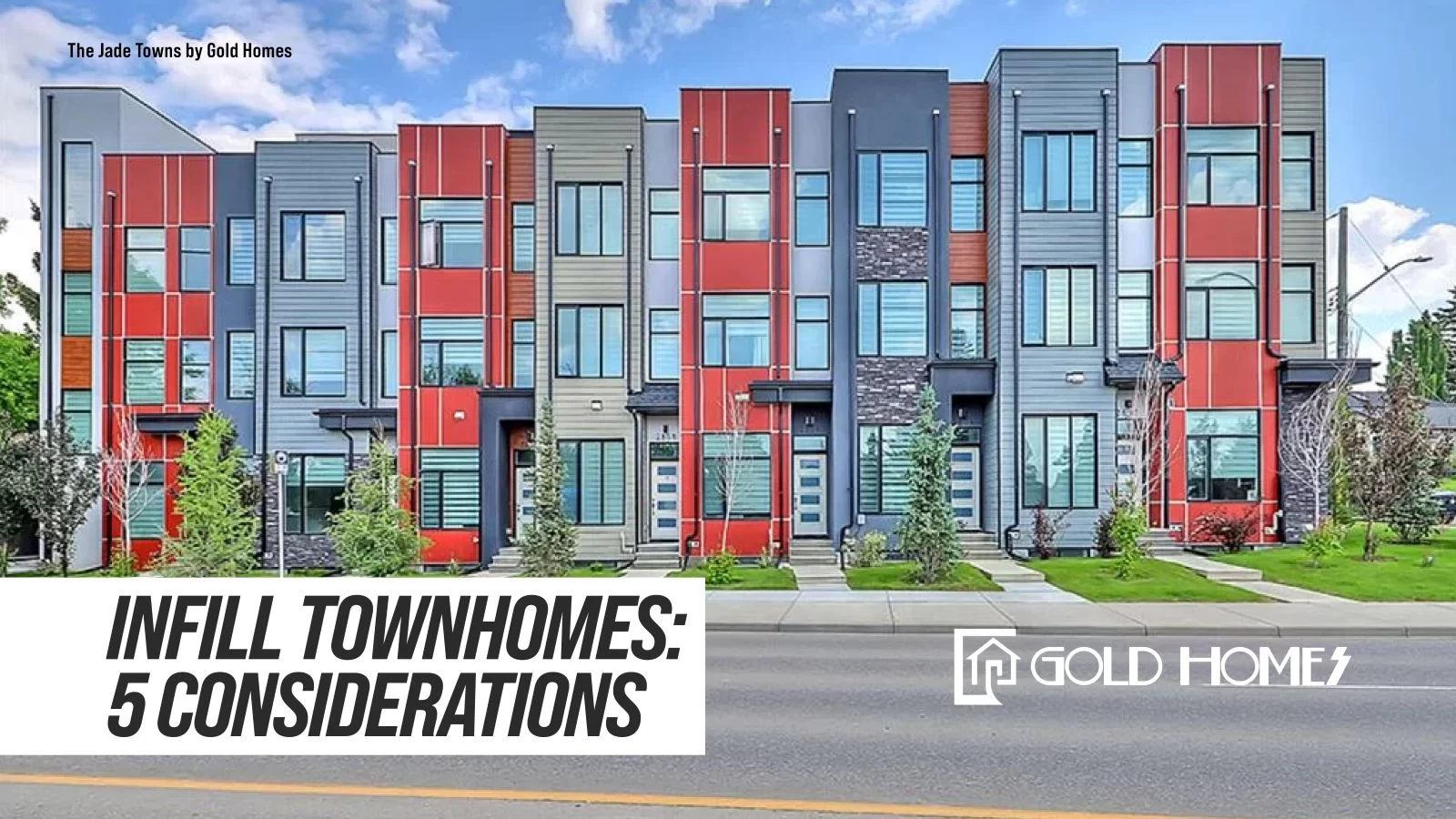
A 75-foot by 120-foot lot in Calgary offers significant flexibility for infill housing, making it ideal for a three-unit development like a triplex or a rowhouse development. Such a lot can be subdivided into three 25-foot parcels, aligning with the city’s 7.5-meter (approximately 25-foot) minimum parcel width requirement for individual rowhouse or duplex units for R-CG zoning.
The design for such a project could vary significantly; you could have three single units or three attached infills that resemble something like a townhouse. It all depends on the design, permits, and discretionary nature of the lot in question. Under R-CG zoning, you could technically also do a six-plex on a lot this size, with three units in the front and three in the back.
100’ x 120’ Lots
100-foot-wide lots are rare like unicorns, but they do exist in and around Calgary’s inner city! Such a lot provides exceptional flexibility for multi-unit infill builds, making it ideal for a four-unit townhouse-style development with the potential for four basement suites as well, for a total of eight units. Under Calgary’s R-CG zoning, this lot size also has potential for up to eight units above-grade, with four in the front and four in the back, and possibly suites below-grade as well. The R-CG zone explicitly permits single-detached, semi-detached, duplex, townhouse, and rowhouse dwellings, all of which are grade-oriented with front doors facing the street.
This configuration offers significant advantages in terms of parking and amenities, as R-CG zoning requires only 0.5 motor vehicle parking stalls per dwelling unit, along with one bicycle parking stall or mobility storage locker for every unit that doesn’t have a motor vehicle parking stall. The larger lot size also allows for better design flexibility, potentially accommodating features like shared outdoor spaces or more generous setbacks while still maximizing housing density and return on your investment.
Corner Lots
Corner lots in Calgary’s inner city are highly sought-after by builders on today’s market because of their viability for four-plex developments. If a corner lot is 50 feet wide and 120 feet long, for example, then the builder can design the infills to switch their orientation so that the front doors face the side street, allowing for the construction of four + four multi-plexes that also qualify for low-interest CMHC funding.
If you own a corner lot, you could be sitting on a gold mine! If you’re looking to sell, or perhaps develop your own four-by-four multi-plex development to earn secondary income for life, make sure to talk to an experienced real estate agent and/or builder to know how much the lot is worth or to figure out how much such a project would cost to build!
Oddly Shaped Lots
While oddly shaped lots can look spacious, they do sometimes present challenges when it comes to infill design. Your architect will have to be creative in how the units are placed; in many instances, these lots are developed into multi-plex, apartment-style units, which aren’t considered infill homes.
Alternatively, some homeowners develop oddly shaped lots into expansive estate-style houses, maximizing every square inch of the property in the process. As with any infill construction project, the outcome all depends on your situation, budget, and end goals!
Questions About Infill Builds in Calgary?

The process for building an infill in Calgary is detailed and requires careful planning and expertise. Finding the right lot is crucial to ensuring a successful project through and through. Partnering with an experienced builder like Gold Homes can make all the difference, providing a smooth journey from start to finish.
If you’re ready to explore the possibility of an infill home in Calgary, contact us today! We have the experience and knowledge to guide you through every step of building an infill and look forward to discussing your homebuilding goals!